



Back
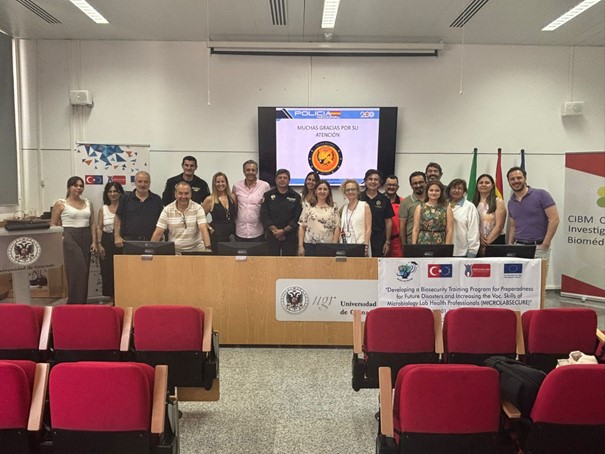
Micro Lab Secure Project – Spain Meeting (TPM 3)
July 07, 2025
University of Granada, Spain
Location: University of Granada, Spain
Dates: 7–10 July 2025
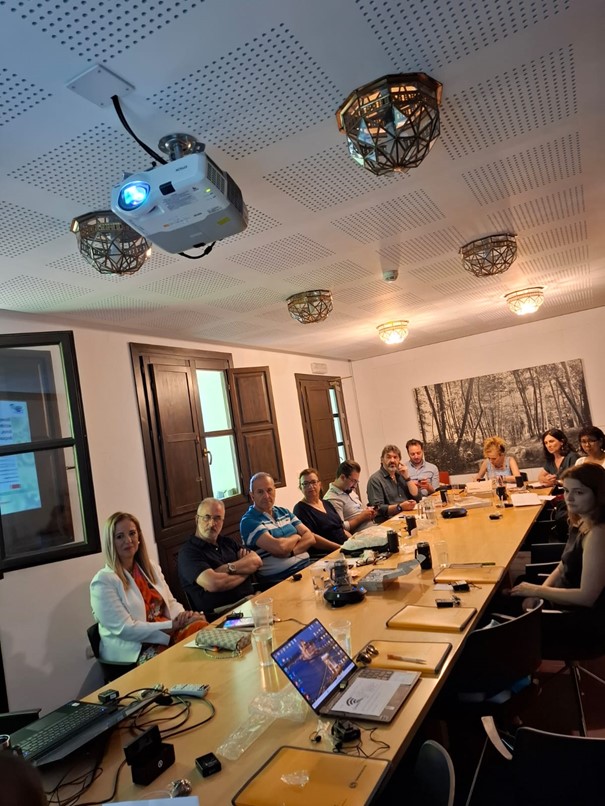
Within the scope of the Erasmus+ KA220 Vocational Education project titled “Development of a Biosecurity Training Program for Future Disaster Preparedness and Enhancement of Professional Skills of Microbiology Laboratory Health Professionals”, coordinated by our association, the 2nd Transnational Project Meeting (TPM) and the 1st Learning, Teaching, and Training Activity (LTTA) were successfully held in Granada, Spain, hosted by the University of Granada (UGR).
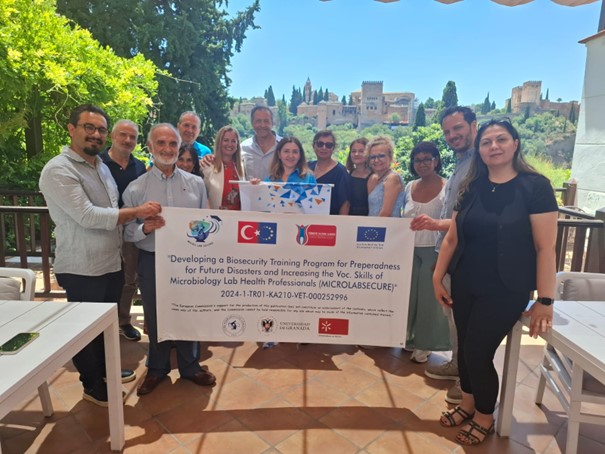
On behalf of our association, Prof. Dr. H. Nevgün ÖZEN (Project Coordinator), Prof. Dr. Ayşegül TAYLAN ÖZKAN, Prof. Dr. Banu SANCAK, Prof. Dr. Emrah RUH, Assoc. Prof. Dr. Taylan BOZOK, Dr. Ilvana ÇAKLOVICA KÜÇÜKKAYA, and technical staff member Nazife ÖZTÜRK, Ph.D., participated in the event.
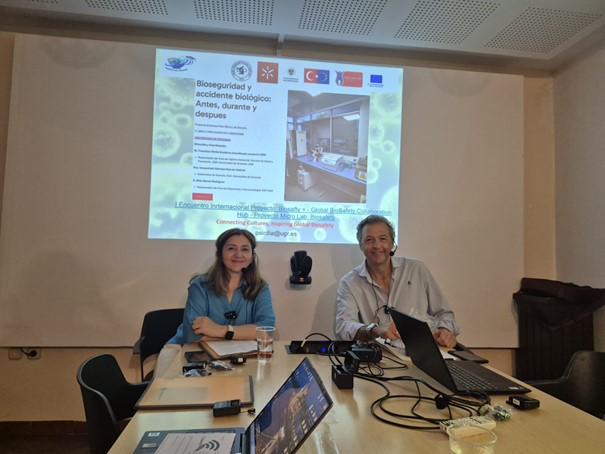
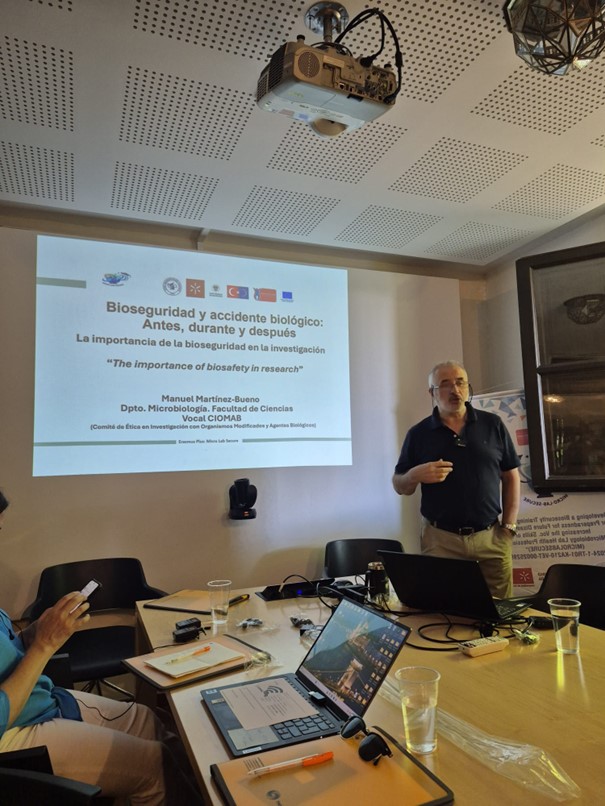
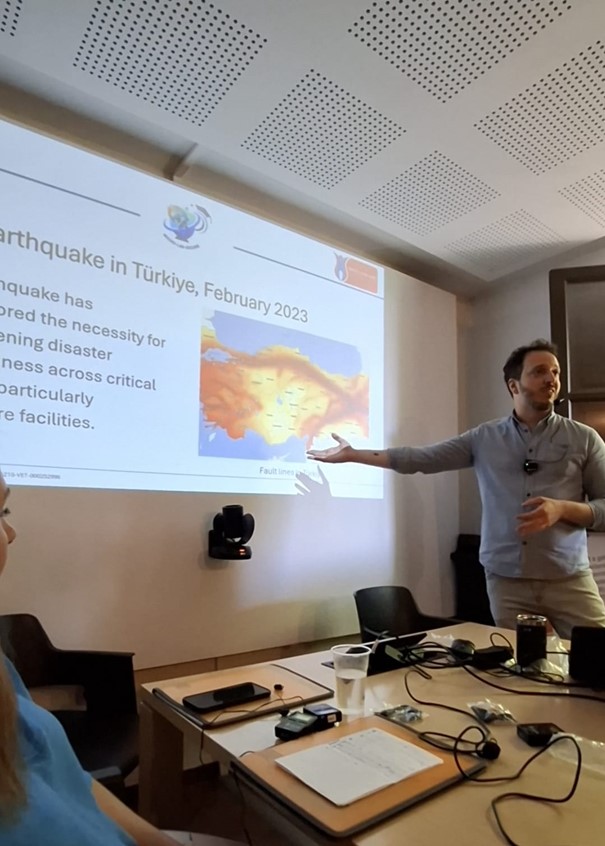
The TPM sessions began with official opening and welcome speeches delivered by institutional representatives from UGR and the project partners. This was followed by a series of academic and institutional presentations focusing on the importance of biosecurity and biosafety, particularly in the context of health and research laboratories. Speakers from Spain and Türkiye presented their national approaches and institutional protocols in the field of microbiological safety.
During the TPM, partners reviewed the project’s aims and objectives, examined the timeline and activities, and discussed the framework of the training program to be developed as a project output. Special emphasis was placed on the planning of biosecurity training modules, including the distribution of responsibilities among partners. The sessions also featured detailed discussions on the development of the project’s website, awareness strategies for laboratory professionals, and the design of an online resource center.
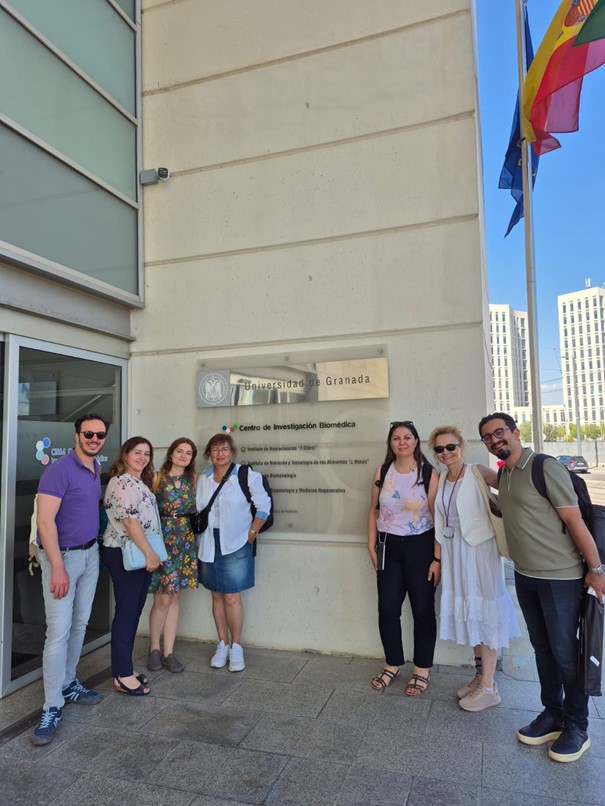
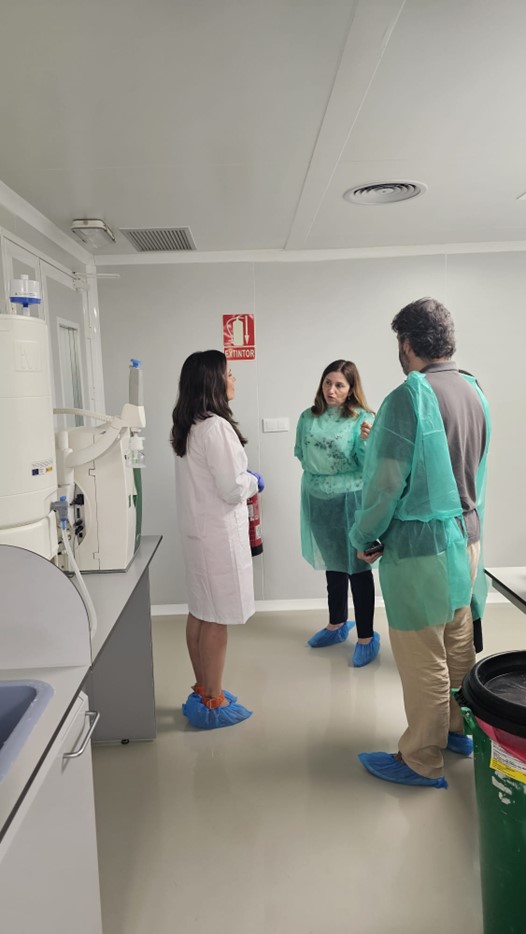
Interwoven with the TPM sessions, the LTTA activities provided participants with a rich learning experience through a combination of lectures, field visits, and interactive discussions. Participants visited state-of-the-art facilities such as the P3 Laboratory and the CIBM Biomedical Research Center, gaining in-depth insight into biosafety measures implemented in high-containment environments and observing best practices directly from field experts.
Throughout the training, participants engaged in discussions on the methodology of the upcoming biosecurity training modules, expected learning outcomes, and evaluation criteria. The sessions also addressed learning scenarios before, during, and after disasters, focusing on how these could be integrated into a modular and scenario-based training framework. Trainers and coordinators shared initial drafts and responsibilities, setting the foundation for the next phase of content development.
The event concluded with a final session focusing on project evaluation, collection of participant feedback, and planning of the next meeting to be held in Portugal. A certificate ceremony was organized, and the week ended with a cultural event that provided participants with an informal opportunity to reflect on and discuss the knowledge and experiences gained throughout the program.
Overall, the TPM and LTTA in Granada made a significant contribution to strengthening collaboration among partners, fostering mutual understanding of project goals, and promoting high-quality preparation for the development of forthcoming training materials. The host institution, University of Granada, as a project partner, provided excellent hospitality and created a productive and inspiring environment for all participants.
Photo Gallery